Where Patience Pays: A Strategic Australian Player's Guide to Games That Genuinely Reward Skill and Discipline
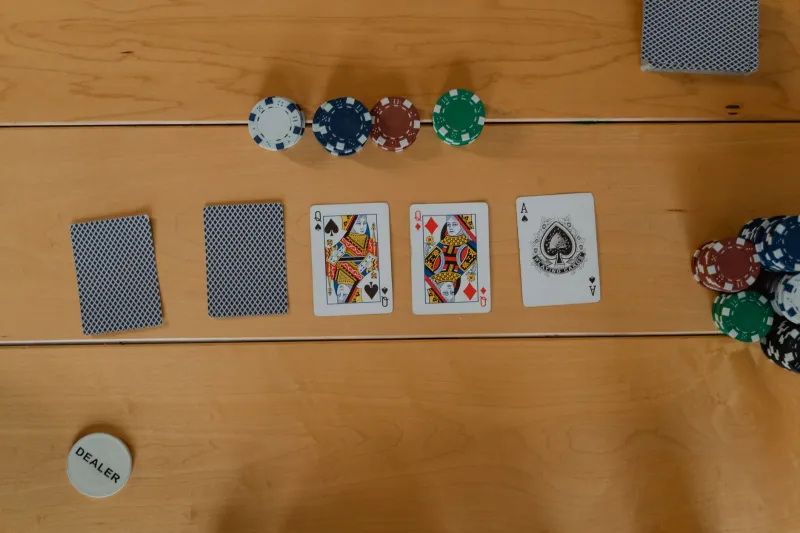
There is a meaningful difference between playing a casino game and studying one. The casual player arrives at the table seeking entertainment, accepts whatever outcome the session delivers, and moves on. The strategic player, by contrast, arrives with a framework — an understanding of probabilities, a tolerance for variance, and a long-term perspective that treats individual sessions as data points rather than verdicts.
For Australian players who aspire to that second category, the most important question is deceptively simple: which games actually reward the effort? Not every title in a premium casino library offers genuine skill potential or favourable expected value. Some are designed purely around chance, offering no meaningful foothold for the disciplined player to improve outcomes over time. Others, however, conceal remarkable depth beneath a polished surface — and those are the games worth understanding.
What follows is a considered examination of the games that consistently reward patient, strategic Australian players, along with the specific mechanics that make them worthy of serious attention.
Blackjack: The Benchmark for Skill-Based Play
Among all table games available to Australian players, blackjack occupies a singular position. When played with basic strategy — a mathematically derived set of decisions based on the player's hand and the dealer's visible card — the house edge can be reduced to somewhere between 0.5 and 1.5 per cent, depending on the specific rule variations in play.
That figure is not incidental. It represents the product of decades of mathematical analysis and means that a disciplined player who consistently applies correct strategy will lose, over time, at a substantially slower rate than one who plays on instinct alone. The gap between an informed player and an uninformed one at a blackjack table is among the most significant skill differentials in the entire casino environment.
Australian players should pay close attention to rule variants when selecting a blackjack table. Games that pay 3:2 on a natural blackjack are considerably more favourable than those offering 6:5. Similarly, tables that allow doubling down after a split, or that use fewer decks, tend to lower the house edge further. These distinctions compound meaningfully over extended play.
Basic strategy is not difficult to learn, but it requires genuine commitment. The player who takes the time to internalise correct decisions — rather than approximating them — is the player positioned to extract maximum value from every session.
Baccarat: Elegant Simplicity with a Favourable Edge
Baccarat occupies an interesting position in the strategic hierarchy. On the surface, it appears to offer little room for player agency — the cards are drawn according to fixed rules, and the player's primary decision is simply where to place their wager. Yet baccarat consistently attracts sophisticated players, and for good reason.
The Banker bet in baccarat carries a house edge of approximately 1.06 per cent, making it one of the lowest available in any casino game. The Player bet sits at roughly 1.24 per cent. Both figures are highly competitive. The Tie bet, by contrast, carries an edge exceeding 14 per cent and should be avoided by any player approaching the game with strategic intent.
The strategic discipline baccarat demands is largely one of restraint. Knowing which bets to make, understanding that past outcomes carry no predictive weight, and managing bankroll with precision are the primary levers available to the patient player. Baccarat rewards those who resist the temptation of proposition bets and maintain consistent, informed wagering.
For Australian players who prefer a measured, lower-variance experience without sacrificing competitive expected value, baccarat represents an exceptionally sound choice.
Video Poker: The Overlooked Skill Frontier
Video poker remains one of the most underappreciated games in the online casino environment, particularly among Australian players who have not yet explored its considerable depth. Unlike electronic slots — which are purely chance-based — video poker involves genuine decision-making that directly influences outcomes.
In variants such as Jacks or Better, a player employing optimal strategy can reduce the house edge to below one per cent. Some favourable paytable configurations push the theoretical return to player above 99 per cent, a figure that compares favourably with virtually any other game in the casino. The critical variable is the paytable itself: a full-pay Jacks or Better machine offers substantially better returns than a short-pay version, and distinguishing between the two is a skill in itself.
The learning curve for video poker is steeper than many players anticipate. Optimal strategy involves memorising a hierarchy of hand rankings and understanding which cards to hold or discard across a wide range of scenarios. However, for the player willing to invest that effort, video poker offers a genuinely skill-responsive environment where disciplined play produces measurably better results over time.
Roulette: Understanding Where the Edge Lives
Roulette is often dismissed by strategic players as a game of pure chance, and in one sense that characterisation is accurate — no system of bet selection can alter the fundamental probabilities of the wheel. However, the distinction between European and American roulette is one that every informed Australian player should understand clearly.
European roulette, which features a single zero, carries a house edge of 2.7 per cent. American roulette, with its additional double-zero pocket, effectively doubles that figure to approximately 5.26 per cent. For a player committed to long-term strategic play, the choice between these variants is not a matter of preference — it is a matter of mathematical discipline.
Some European roulette tables also offer the La Partage rule, which returns half of even-money bets when the ball lands on zero. Under this configuration, the house edge on even-money bets drops to approximately 1.35 per cent, making it one of the more competitive options available. Selecting the right variant of roulette is, in itself, a form of strategic decision-making.
Poker: The Highest Skill Ceiling in the Casino
For the Australian player prepared to invest serious time and intellectual effort, poker — particularly in its live dealer or tournament formats — offers the highest skill ceiling of any game in the casino environment. Unlike other games where the player competes against the house, poker pits players against one another. The house takes a fixed percentage of each pot (the rake), and long-term profitability depends entirely on the player's ability to outperform opponents.
This dynamic means that a genuinely skilled player can achieve a positive expected value over time — something that is structurally impossible in games played directly against the house. The disciplines required are extensive: hand reading, pot odds, position awareness, bankroll management, and psychological composure under pressure. None of these skills develop overnight, but each is learnable, and the player who commits to that development is positioned to operate at an entirely different level.
Constructing a Strategic Game Portfolio
The most sophisticated Australian players rarely confine themselves to a single game. Instead, they construct what might be called a strategic portfolio — a deliberately chosen selection of games that balances skill development, expected value, and session variance according to their individual objectives.
A player might anchor their sessions in blackjack or video poker, where skill directly influences outcomes, while incorporating baccarat for periods when they prefer a lower-intensity, still-competitive experience. Poker might feature as a longer-term development pursuit. The through-line is intentionality: every game in the portfolio has been selected for a specific reason, and the player understands precisely what each one offers.
At SkyCrown Casino, where the expectation is that serious players deserve serious choices, the library is curated with exactly this kind of discernment in mind. The games that occupy the premier tiers of that collection are there because they reward the player who arrives prepared — not simply the one who arrives.
Patience, in the end, is not merely a virtue in strategic casino play. It is a competitive advantage. The player who understands which games reward that patience, and who commits to developing genuine proficiency within them, is the player best positioned to ascend toward the kind of sustained, elevated gaming experience that defines play at the highest level.