Seasons at the Summit: How Australia's Climate Rhythms Shape Smarter Gaming Decisions
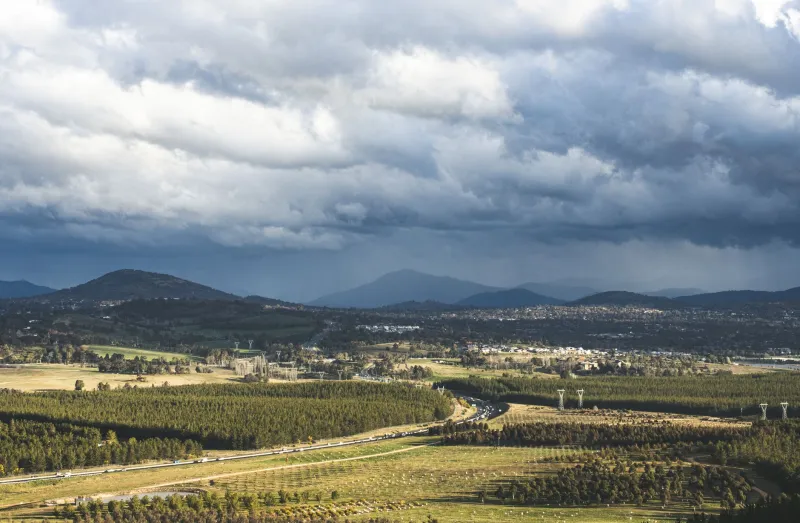
Australia is not a country of mild, forgettable seasons. From the broiling humidity of a Darwin wet season to the sharp, clear cold that settles over Melbourne's laneways in July, the Australian climate is a presence — one that shapes daily routines, energy levels, and cognitive states in ways that most people sense but rarely examine. For serious casino players, that influence extends directly to the virtual tables.
At SkyCrown Casino, where the emphasis is on elevating the quality of every session rather than merely the quantity, understanding the environmental forces that affect your play is not a peripheral concern. It is, for the most thoughtful players, a genuine strategic consideration.
The Mind Does Not Exist in Isolation from the Body
Before examining the seasonal patterns specific to Australia, it is worth establishing a foundational principle: cognitive performance is inseparable from physiological state. Heat affects concentration. Cold affects alertness. Disrupted sleep patterns — common during both the long, bright evenings of an Australian summer and the short, dark days of winter — directly compromise the kind of disciplined, patient decision-making that separates measured players from impulsive ones.
This is not speculation. Decades of research in occupational psychology and sports science confirm that ambient temperature, light exposure, and seasonal hormonal shifts all exert measurable influence on mood, risk tolerance, and attention span. The casino player who dismisses these factors is, in effect, choosing to ignore part of the performance equation.
Summer: Heat, Restlessness, and the Temptation to Overplay
Australian summers are intense. In the interior and the northern regions, temperatures that push well above 40 degrees Celsius are not unusual. Even in coastal cities like Sydney and Perth, January and February bring a kind of heavy, restless energy that is difficult to ignore.
For players, this restlessness can translate into session behaviour that works against long-term strategic goals. Heat-induced fatigue shortens attention spans. The discomfort of a poorly cooled environment makes patience feel like a physical burden. Players may find themselves moving through games more quickly, making decisions with less deliberation, or extending sessions past the point of genuine engagement simply because the outdoor alternative feels unappealing.
The practical implication is straightforward: summer sessions benefit from deliberate environmental management. Playing in a properly cooled space, during the cooler hours of the morning or late evening, and with clearly defined session lengths is not merely a comfort measure — it is a performance measure. The player who controls their environment controls a meaningful variable in their outcomes.
The Long Evenings of Summer and the Risk of Overextension
Australia's summer daylight hours are extended, particularly in southern states where daylight saving pushes the evening light well past eight o'clock. This can subtly distort a player's sense of time. Sessions that begin at what feels like early evening may extend well into the night before the player realises how much time has elapsed.
The most disciplined players account for this by anchoring their sessions to clock time rather than light levels. A pre-set end time, established before a session begins, is far more reliable than relying on natural light cues that summer renders unreliable. This is precisely the kind of structured discipline that separates considered players from those who allow their environment to make decisions on their behalf.
Winter: Stillness, Focus, and the Opportunity for Depth
If summer presents risks rooted in restlessness and fatigue, winter offers a different set of conditions — ones that, for many players, are considerably more conducive to focused, high-quality play.
The cooler months across southern and southeastern Australia bring a natural drawing inward. Evenings arrive earlier. The impulse to be outdoors diminishes. For players who have managed their summer sessions carefully and arrive at the winter months with their bankrolls and strategies intact, this period often represents a genuine opportunity to play at their best.
Cooler ambient temperatures tend to support sustained concentration. The social calendar thins in many households, reducing interruptions. The contemplative quality of a winter evening — a well-lit room, a settled mind, the absence of the summer's ambient noise — creates conditions in which patient, methodical play comes more naturally.
This is not to suggest that winter guarantees good play. The isolation that some players experience during the colder months can, for those who are not attentive, tip into a different kind of vulnerability: playing to fill time rather than playing with purpose. The distinction matters. A session undertaken out of genuine strategic intent is categorically different from one undertaken out of boredom.
Autumn and Spring: The Transition Windows
Australia's shoulder seasons — the mild, changeable weeks of autumn and spring — are worth considering in their own right. These are, for many players, the most psychologically balanced periods of the year. Temperatures are moderate. The dramatic extremes of summer and winter have passed or not yet arrived. Energy levels tend to stabilise.
For players who track their own session data — win rates, session lengths, decision quality, emotional state — autumn and spring often emerge as the periods in which their most consistent play occurs. If you have not yet begun recording these variables alongside the date and time of your sessions, the shoulder seasons are an ideal time to establish that habit.
Aligning Your Schedule with Your Personal Peak Windows
The broader principle underlying all of this is one that SkyCrown Casino's most accomplished players understand intuitively: peak performance is not a fixed state. It is a moving target, influenced by season, time of day, physical condition, and dozens of other variables. The player who maps those variables honestly — who knows, for instance, that they play their best poker variants on winter weekday evenings and their worst on hot summer afternoons — has access to an edge that no bonus structure or promotional offer can replicate.
Building this kind of self-knowledge requires record-keeping. It requires honesty about the sessions where decisions felt sharp versus those where they felt forced. And it requires the discipline to act on what that data reveals — including the discipline to close the session when conditions are not right, regardless of whether you are ahead or behind.
The Environment Is Part of the Game
Sophisticated players understand that the game does not begin when the first hand is dealt or the first spin is initiated. It begins with the conditions in which that play occurs. In Australia, where the climate is neither subtle nor forgiving, those conditions deserve the same careful attention that any serious player would bring to understanding game mechanics, odds, or bankroll allocation.
At the altitude where genuine gaming excellence is pursued, no variable is too small to consider. The weather outside your window is, it turns out, very much your business.